
A race poster and a terrain keepsake can both remember the same day. They put the emphasis in different places. Choose by the way you want to encounter the memory, rather than assuming one format is right for every route.
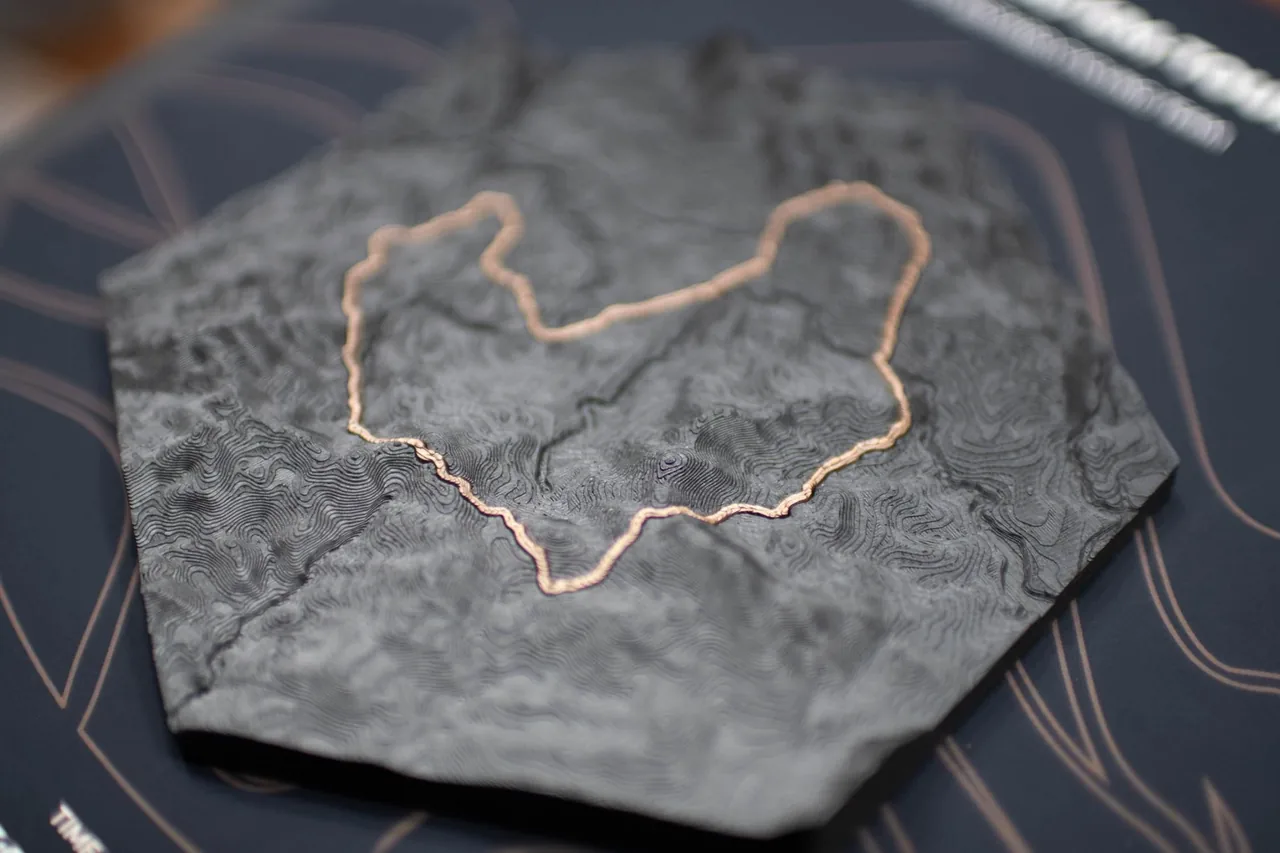
A graphic line or a physical landscape
A poster can give most of its space to a clean route line, typography and map context. A terrain piece adds raised ground and the shadows it creates. The physical relief can make a mountain journey especially tangible, while a graphic treatment may suit someone who prefers a flatter, quieter wall display.
How much detail should be visible?
Fine roads, labels and dense route sections can be presented differently on paper and in a physical model. A small terrain hexagon cannot preserve every detail at full geographic scale. Think about whether you want to read street names, recognise the route silhouette or see the climbs in relief. FinishRelic focuses on the route and landscape, not a fully labelled street atlas.
Measure the space as well as the wall
Core and Luma have exterior dimensions of 215 × 303 × 55 mm. That depth is part of their presence. Luma includes warm perimeter LEDs; Core does not. Check the actual product measurements when comparing them with a framed poster.
Decide where the personal details belong
A title, name, time and date may be central to an event keepsake. Core and Luma include a printed backing for those details; Terrain deliberately omits it. Poster layouts vary by maker. Compare the information you want to see every day rather than filling every available field simply because it exists.
Choose the memory you want to live with
If the landscape is what you remember, explore it in the 3D preview. If an understated line and text are your priority, a poster is a valid choice. For FinishRelic, compare the four editions and inspect your route before deciding. All five editions are available to order; questions about the intended display are welcome.