
Core and Luma start with the same idea: your route and the landscape around it, held in a compact black frame. The difference is how you want that landscape to appear as the light in the room changes.
Core: let the surrounding light reveal the relief
Core has no integrated lighting. Daylight and room light create shadows across the black terrain, with a bronze or red route providing contrast. It is a straightforward choice when you want the relief, title and finish details to carry the design without an illuminated backing.
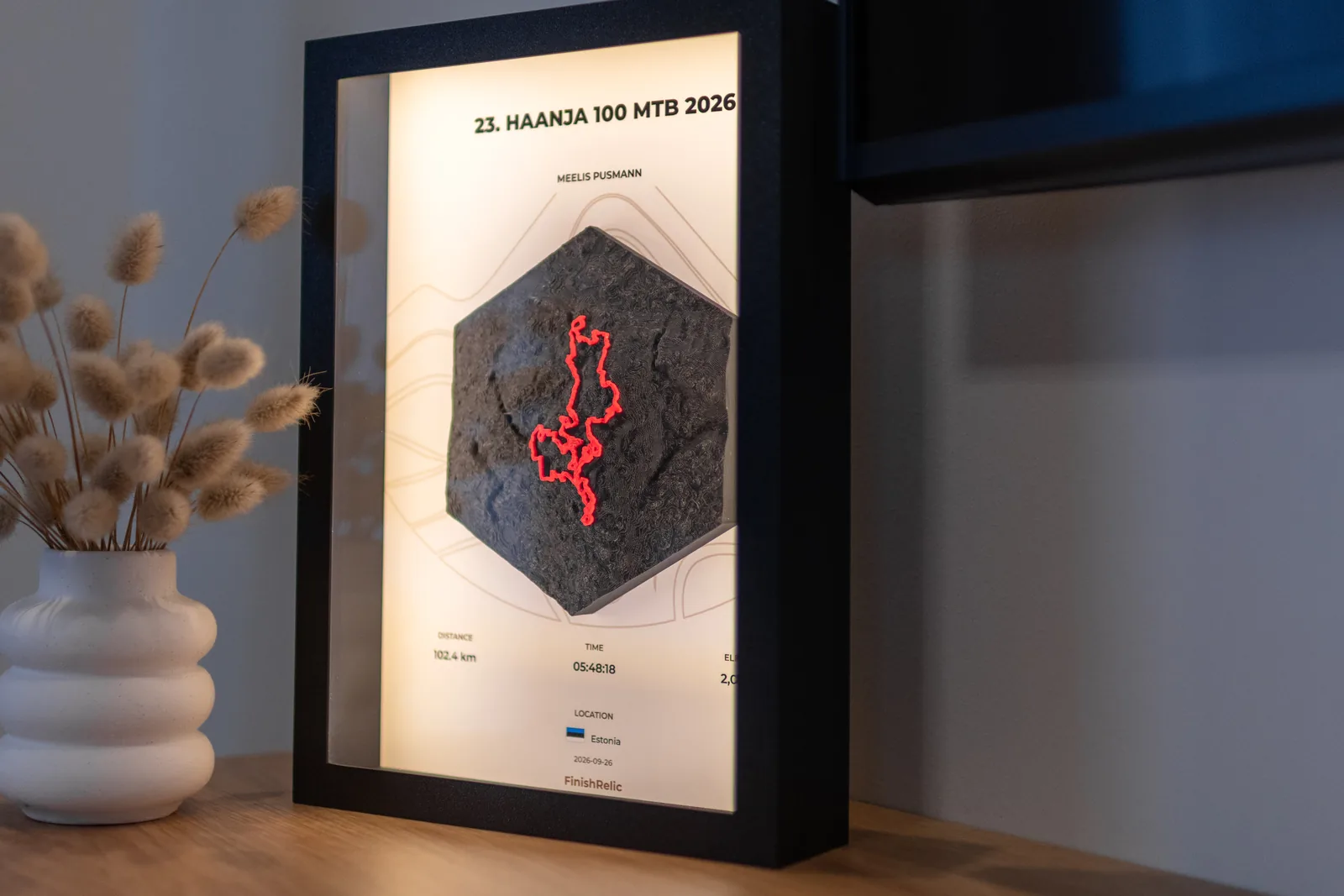
Luma: a warm presence after dark
Luma has warm LEDs around the inside perimeter of the frame, shining inward across the backing and terrain. The route itself is a separately printed coloured part, not an illuminated strip. This is the lighting arrangement shown in the Luma product images. Luma is powered by 5V through a USB-A cable, which can connect to a compatible phone charger or computer.
The same compact exterior size
Both editions measure 215 mm wide × 303 mm high × 55 mm deep externally. Their terrain hexagon is 150 mm tall. Both offer a light or dark backing, bronze or red route, and personal details such as title, name, date, distance, time, elevation and location. Compare those exterior measurements with the space where you intend to display the piece.
Choose around the place you will see it
Think about when you notice the objects in that room. An unlit piece may suit a bright daytime workspace; warm illumination may appeal in an evening setting. Neither option changes the geography of the route. Luma uses 5V USB-A power. The products can stand on flat surfaces or hang using the hole in the back.
What about Origin and Terrain?
Origin is the unlit concept in a natural oak frame, with an A4 backing and no glass. Terrain removes the frame and printed backing entirely. If lighting is your priority, Luma is the illuminated edition. If you are undecided, start with your route in the preview and compare all four formats before choosing.